

On the UA Mall and Flandrau
When
August 2026 Tucson Partial Lunar Eclipse Information and Watch Party

Near Total Lunar Eclipse Visible from Tucson
About this Lunar Eclipse
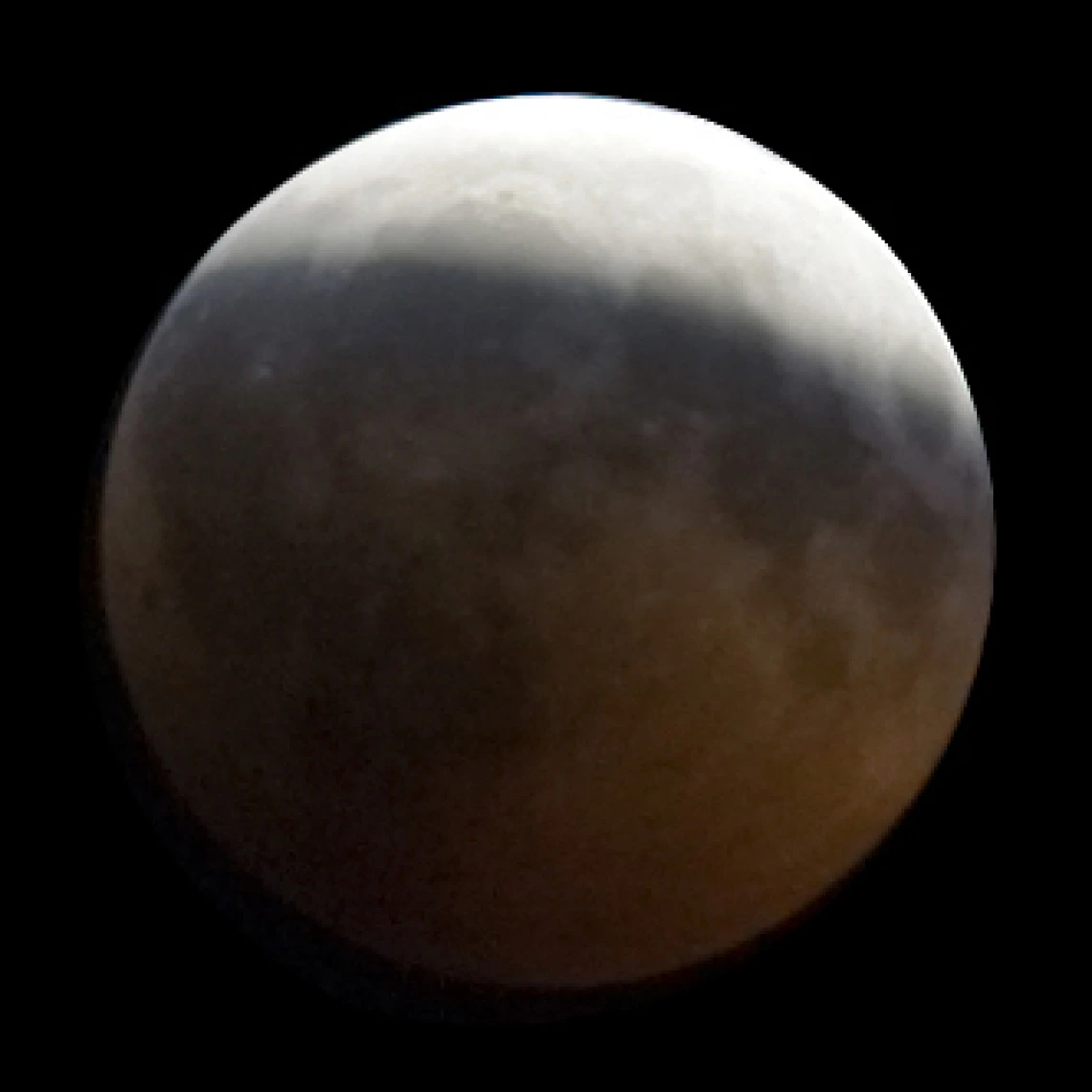
We have a partial lunar eclipse coming up on Thursday, August 27, 2026 that will be visible from Tucson! It will be in the evening, at a convenient time that is not too late. While it is not a total eclipse, a maximum of about 96% of the Moon's area will be in the Earth's umbra, or inner shadow. There will be just a tiny sliver that remains in the penumbra, or outer shadow. You can expect to see something like the photo here, taken during a similar eclipse in 2008. (Actually, that one only got up to 84%, so we'll see a little more coverage.)
Partial Lunar Eclipse Timeline
- Penumbral eclipse starts: 6:23 pm (not visible)
- Moon rises 6:45 pm
- Partial eclipse starts: 7:33 pm
- Maximum eclipse: 9:12 pm
- Partial eclipse ends: 10:51 pm
- Penumbral eclipse ends: 12:01 am
.

Lunar Eclipse Watch Party at Flandrau!
Presented by the Joseph Stanley Leeds Foundation
Thursday, August 27, 2026 | 5:30 to 10PM
1601 E University Blvd.
Free
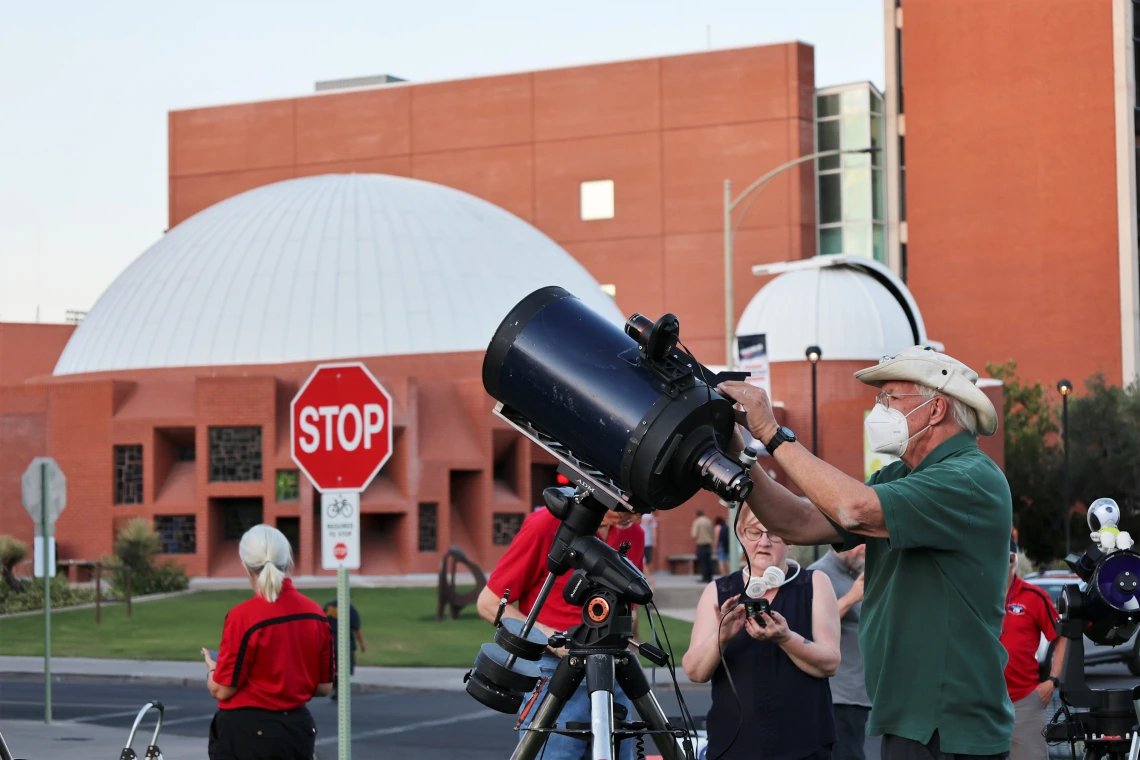
🔭 Telescopes, activities, planetarium presentations, laser shows, and more inside Flandrau and on the UA Mall!
👩🔬 All activities, presentations, and planetarium shows are free for everyone thanks to our generous presenting sponsor!
🎟️ Free show tickets are first-come, first served and will be distributed in person on the night of the event starting at 5:30 until they sell out.
💺 To help us serve as many visitors as possible, there is a strict limit of one planetarium or laser show per person.
Thanks to our community friends bringing telescopes and activities:
Event timeline
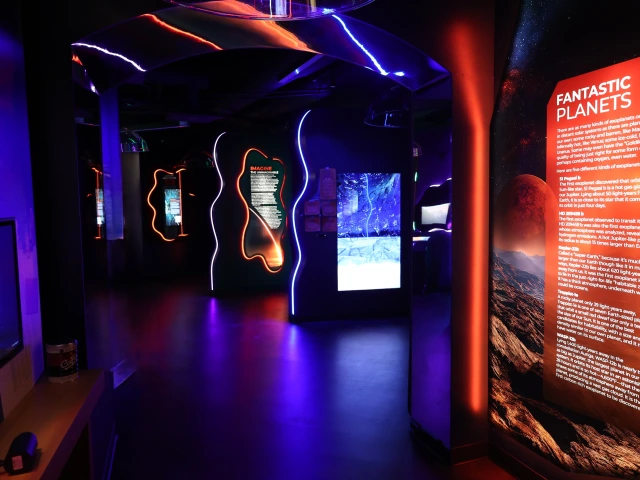
5:30PM - Science Center open late
Explore the new astronomy, exoplanet, and extraterrestrial communication research exhibit Mysteries of the Cosmos: Life in the Universe along with six other exhibits exploring Mars, science careers, U of A research, insects, marine life, and fossils! All exhibits will be open until 10PM.
Free! Doors open at 5:30PM
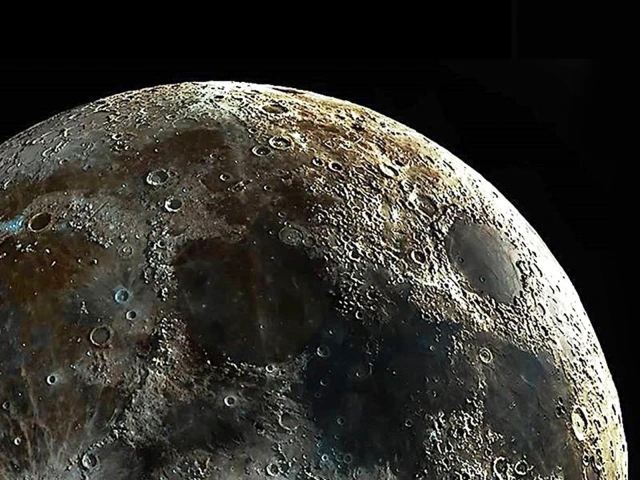
6PM - Planetarium Show: Tucson Moon & Beyond
Let our planetarium operators take you on a live journey sharing fascinating facts about the night sky and our closest natural satellite, the Moon!
Free! Get your show pass at Flandrau

7PM - Planetarium Show: Forward! To the Moon
Learn all about NASA’s Artemis program, named after the Greek moon Goddess and twin of Apollo, and the next step in our mission to conduct new research and research bases on the moon.
Free! Get your show pass at Flandrau
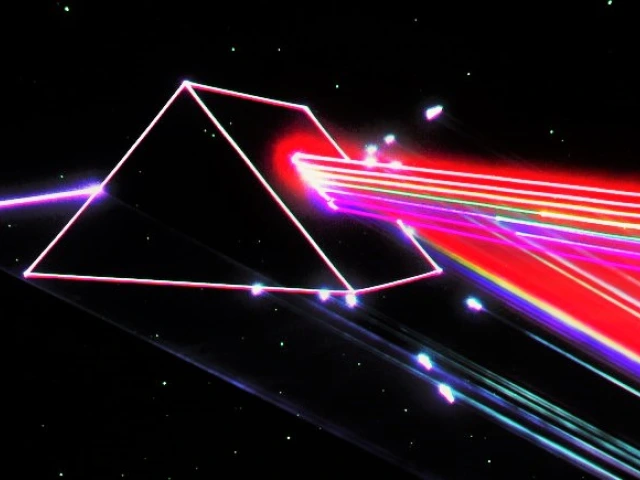
7:45PM - Laser Show: Pink Floyd's Dark Side of the Moon
The generational experience on a very appropriate night. Add your journey to the Dark Side of the Moon to your evening. This show is about one hour long and gets out before the maximum eclipse.
Free! Get your show pass at Flandrau
9:12PM - Maximum Eclipse
Head outside on the U of A Mall to catch 96% of the Moon covered by Earth's shadow!
Free! Outside viewing
9:45PM - Laser Show: Pink Floyd's Dark Side of the Moon (encore)
First show sold out? No problem! Stay a little later to enjoy a second screening of this favorite laser show.
Free! Get your show pass at Flandrau
.
Media Coverage Contact
Nick Letson, letsonn@arizona.edu